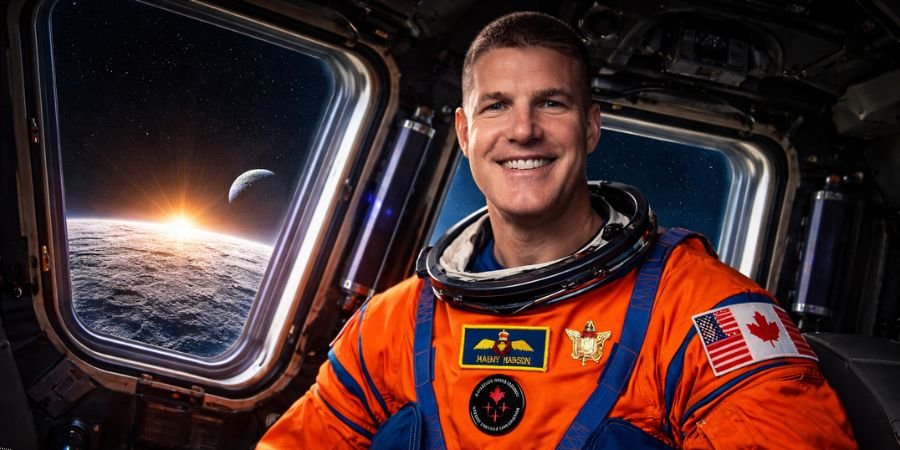
Jeremy Hansen Makes History With First Lunar Sunrise Images
Jeremy Hansen, a Canadian Space Agency (CSA) astronaut, made history during his return flight by becoming the first Canadian to witness a “lunar sunrise” from orbit. He also shared the first high-definition images of this rare celestial event with Earth, marking a significant milestone in space exploration.
The images, released shortly after the observation, have quickly gained global attention for their clarity and scientific value. Hansen’s achievement not only highlights technological advancements but also reinforces Canada’s growing role in international space missions.
A Historic Moment in Space Exploration
The phenomenon of a lunar sunrise—when sunlight gradually illuminates the Moon’s surface from orbit—has been observed before, but never captured in such high-definition detail by a Canadian astronaut. Hansen’s images provide new insights into the Moon’s surface composition and light interaction, which could prove valuable for future lunar missions.
This moment is particularly significant as it represents a shift toward more inclusive global participation in space exploration. While earlier milestones were largely dominated by U.S.-led missions, Hansen’s contribution underscores the importance of international collaboration.
Why Jeremy Hansen Is Trending Today
Jeremy Hansen is trending worldwide not only for his groundbreaking images but also for receiving the prestigious “Gold Astronaut Pin” on the same day. This honor symbolizes excellence in space missions and recognizes his contribution to advancing scientific understanding.
The combination of this award and the release of the lunar sunrise images has captured public imagination. Social media platforms and space communities are actively sharing his work, celebrating both the visual achievement and its broader implications for global cooperation.
A Symbol of International Collaboration
Hansen’s achievement reflects a broader shift in space exploration, where agencies like the Canadian Space Agency work alongside international partners. This collaborative approach enables shared resources, knowledge exchange, and more ambitious missions.
The success of this mission demonstrates how countries beyond the traditional space powers are playing increasingly vital roles. It also sets a precedent for future joint missions aimed at lunar exploration and beyond.
What Comes Next for Space Exploration
As interest in lunar missions continues to grow, Jeremy Hansen’s contribution may pave the way for more advanced imaging technologies and deeper exploration initiatives. With upcoming international missions planned, including potential human returns to the Moon, such milestones are likely to become even more impactful.
Looking ahead, Hansen’s achievement could inspire further global partnerships, pushing the boundaries of what humanity can accomplish together in space.