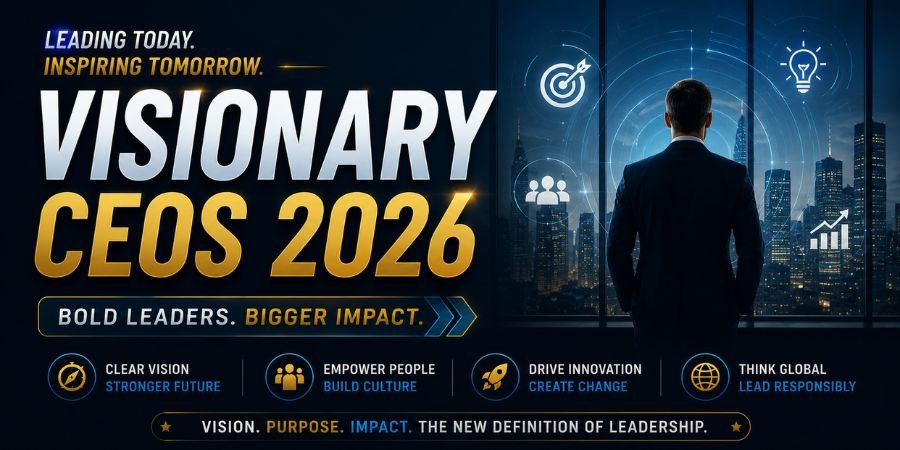
The business world in 2026 looks dramatically different from what it did just a few years ago. Artificial intelligence is reshaping industries, remote work has evolved into hybrid global collaboration, sustainability is now a boardroom priority, and consumers expect brands to stand for something bigger than profit. In the middle of this transformation stands a new generation of leaders: visionary CEOs 2026. These executives are not simply managing companies — they are redefining how organizations innovate, compete, and grow in a rapidly changing global economy.
Today’s most successful CEOs combine strategic thinking with technological awareness, emotional intelligence, adaptability, and long-term vision. They understand that leadership in 2026 is no longer about maintaining the status quo. It is about anticipating disruption before it arrives, building resilient teams, and creating businesses capable of surviving constant change. Whether leading tech giants, sustainability startups, healthcare companies, or digital-first brands, visionary CEOs are setting the tone for the future of entrepreneurship and corporate leadership worldwide.
This article explores what defines visionary leadership in 2026, the characteristics shared by top CEOs, the industries experiencing the biggest transformation, practical lessons entrepreneurs can apply, and the emerging leadership trends shaping the next decade of business success.
What Defines Visionary CEOs in 2026?
The phrase “visionary CEO” is often overused, but in 2026 it carries a very specific meaning. A visionary leader is someone who sees opportunities before competitors recognize them and builds systems capable of adapting to future market realities.
Unlike traditional executives focused solely on quarterly profits, visionary CEOs prioritize long-term impact, innovation, and organizational resilience. They understand that sustainable growth comes from continuous reinvention rather than short-term wins.
Several key characteristics separate visionary CEOs from average business leaders.
Strategic Foresight
Modern CEOs operate in unpredictable markets. Economic uncertainty, AI disruption, geopolitical shifts, and changing consumer behavior require leaders to think years ahead.
Visionary CEOs consistently ask:
- What will customers need in five years?
- Which technologies could disrupt our industry?
- How can we future-proof the business?
- What new opportunities are emerging globally?
This future-oriented thinking allows companies to pivot early instead of reacting too late.
Technology-Driven Leadership
In 2026, every company is effectively a technology company. Even industries like retail, healthcare, manufacturing, education, and logistics rely heavily on automation, AI, and data analytics.
Visionary CEOs are not necessarily software engineers, but they deeply understand how technology influences growth and competitive advantage. They actively invest in:
- Artificial intelligence
- Predictive analytics
- Automation systems
- Cloud infrastructure
- Cybersecurity
- Customer personalization tools
The CEOs thriving today are those who integrate technology into business strategy instead of treating it as a separate department.
Human-Centered Management
One of the biggest shifts in leadership philosophy involves employee experience. Visionary CEOs in 2026 understand that high-performing companies depend on motivated, emotionally connected teams.
Modern leadership emphasizes:
- Flexible work culture
- Employee well-being
- Transparent communication
- Continuous learning
- Diversity and inclusion
- Mental health awareness
Companies with strong internal cultures are outperforming competitors in talent retention and innovation.
Sustainability and Social Responsibility
Consumers in 2026 expect businesses to contribute positively to society. Environmental, social, and governance (ESG) strategies are no longer optional public relations initiatives.
Visionary CEOs integrate sustainability directly into business operations. This includes:
- Ethical supply chains
- Carbon reduction goals
- Renewable energy adoption
- Responsible sourcing
- Community impact programs
Brands that ignore sustainability risk losing trust among younger consumers and investors alike.
Why Visionary Leadership Matters More Than Ever
Business environments have become increasingly volatile. Markets evolve rapidly, customer attention spans are shorter, and digital disruption can destroy outdated business models almost overnight.
In this environment, leadership quality directly determines whether companies survive or collapse.
Faster Innovation Cycles
In previous decades, businesses could maintain dominance for years before facing serious competition. Today, startups can disrupt billion-dollar industries within months.
Visionary CEOs maintain a culture of continuous innovation to avoid becoming irrelevant.
Examples include:
- Rapid product experimentation
- Customer feedback integration
- Agile development models
- Data-driven decision-making
The speed of execution often matters more than company size.
AI and Automation Are Reshaping Jobs
Artificial intelligence is transforming business operations across nearly every industry. CEOs must balance automation efficiency with human workforce development.
Visionary leaders focus on:
- Reskilling employees
- AI integration strategies
- Ethical AI implementation
- Workforce adaptability
Companies that fail to prepare their teams for technological transformation risk major operational disruption.
Consumer Expectations Have Changed
Modern consumers demand more than quality products. They want personalized experiences, transparency, convenience, and ethical behavior from brands.
Visionary CEOs recognize that customer trust is now one of the most valuable business assets.
Key Traits Shared by Visionary CEOs 2026
Although industries differ, many successful CEOs share remarkably similar leadership characteristics.
Adaptability
The ability to pivot quickly has become essential. Markets change rapidly, and rigid leadership styles no longer work.
Visionary CEOs are comfortable making adjustments when circumstances evolve. They are willing to abandon outdated strategies and embrace experimentation.
Adaptable leaders encourage innovation across all departments rather than forcing strict hierarchical control.
Strong Communication Skills
Leadership communication in 2026 extends far beyond boardroom presentations. CEOs must communicate effectively with:
- Employees
- Investors
- Customers
- Media
- Online communities
- Global stakeholders
Authenticity matters more than polished corporate messaging. Employees and consumers quickly recognize performative leadership.
Visionary CEOs communicate clearly during uncertainty and maintain trust through transparency.
Data-Driven Decision Making
Modern business generates enormous amounts of data. Successful CEOs use analytics to guide strategic decisions rather than relying entirely on instinct.
This includes analyzing:
- Consumer behavior
- Market trends
- Operational efficiency
- Employee productivity
- Financial forecasting
However, visionary leaders balance data with creativity and human judgment.
Continuous Learning
The best CEOs never stop learning. Industries evolve too quickly for leaders to rely solely on past experience.
Modern executives regularly invest time in:
- Industry research
- Leadership development
- Emerging technologies
- Global economic trends
- Consumer psychology
Learning agility has become a major competitive advantage.
Industries Being Transformed by Visionary CEOs
Several sectors are experiencing particularly dramatic change in 2026.
Technology and Artificial Intelligence
AI remains the dominant force driving business transformation. Visionary CEOs in tech focus heavily on responsible AI adoption, cybersecurity, and scalable automation.
Major priorities include:
- AI-powered customer service
- Intelligent automation
- Predictive analytics
- Personalized digital experiences
- AI ethics governance
Technology leaders who prioritize trust and transparency are gaining stronger consumer loyalty.
Healthcare Innovation
Healthcare has evolved significantly through telemedicine, AI diagnostics, wearable devices, and digital patient management systems.
Visionary healthcare CEOs focus on:
- Accessible healthcare solutions
- Preventive medicine
- AI-assisted diagnostics
- Remote patient care
- Personalized treatment plans
Healthcare entrepreneurship is becoming increasingly technology-driven.
Sustainable Energy
Renewable energy companies are growing rapidly due to climate concerns and government policy shifts.
Modern energy CEOs prioritize:
- Solar innovation
- Electric mobility
- Battery storage
- Green infrastructure
- Carbon neutrality strategies
Sustainability-focused leadership is attracting major investment opportunities.
E-Commerce and Retail
Retail continues evolving toward highly personalized digital experiences.
Visionary retail CEOs emphasize:
- Omnichannel experiences
- AI-driven recommendations
- Faster logistics systems
- Creator-driven commerce
- Social shopping integration
Customer convenience now defines retail competitiveness.
Leadership Lessons Entrepreneurs Can Learn From Visionary CEOs
You do not need to run a billion-dollar corporation to apply visionary leadership principles. Small business owners, startup founders, and freelancers can use many of the same strategies.
Build Long-Term Vision Early
Many entrepreneurs focus only on short-term survival. While cash flow matters, sustainable businesses require a long-term roadmap.
Ask yourself:
- Where should the business be in three years?
- Which trends could affect growth?
- What competitive advantage can become difficult to copy?
Visionary CEOs always balance immediate execution with future planning.
Embrace Technology Early
Small businesses that adopt modern tools gain significant advantages.
Useful technologies include:
- AI writing tools
- Customer relationship management software
- Marketing automation
- Data analytics platforms
- Online collaboration systems
Technology adoption improves efficiency and scalability.
Focus on Brand Trust
Trust has become a powerful business currency. Customers support brands that appear authentic, transparent, and customer-focused.
Ways to strengthen brand trust include:
- Honest communication
- Reliable customer support
- Consistent quality
- Transparent pricing
- Ethical practices
Visionary leaders understand that reputation compounds over time.
Invest in Team Development
Even small startups benefit from strong internal culture.
Effective leaders:
- Encourage feedback
- Provide growth opportunities
- Recognize employee contributions
- Create collaborative environments
High-performing teams drive innovation and business resilience.
How Visionary CEOs Handle Crisis and Uncertainty
The last few years demonstrated how unpredictable business environments can become. Economic instability, supply chain disruption, inflation, cybersecurity risks, and technological disruption require strong crisis leadership.
Visionary CEOs approach uncertainty differently from reactive leaders.
They Prioritize Agility Over Perfection
During crises, waiting for perfect information can be dangerous.
Successful CEOs make informed decisions quickly, adjust when needed, and maintain momentum rather than becoming paralyzed by uncertainty.
They Communicate Frequently
Silence during uncertainty creates anxiety among employees and customers.
Visionary CEOs provide regular updates, explain decisions clearly, and maintain transparency even during difficult situations.
They Diversify Risk
Modern leaders reduce dependence on single revenue streams, suppliers, or markets.
This may include:
- Expanding product lines
- Entering new regions
- Building digital revenue channels
- Creating operational redundancies
Diversification improves long-term stability.
The Role of Artificial Intelligence in Executive Leadership
AI is no longer just an operational tool. It is influencing executive-level decision-making itself.
Visionary CEOs 2026 use AI to:
- Predict market behavior
- Improve customer experience
- Optimize operations
- Forecast financial performance
- Enhance productivity
However, successful leaders recognize that AI complements human judgment rather than replacing it entirely.
Ethical AI Leadership
One major concern in 2026 involves responsible AI usage.
Visionary CEOs prioritize:
- Data privacy
- Bias prevention
- Transparent algorithms
- Workforce transition planning
Ethical leadership helps maintain customer and employee trust.
AI as a Competitive Advantage
Businesses using AI strategically can operate faster, reduce costs, and personalize experiences more effectively.
Companies slow to adopt AI risk losing market relevance.
Visionary CEOs and Workplace Culture in 2026
Corporate culture has changed dramatically in recent years.
Employees increasingly prioritize:
- Flexibility
- Purpose-driven work
- Career growth
- Work-life balance
- Inclusive environments
Visionary CEOs recognize that strong culture improves productivity, creativity, and retention.
Hybrid Work Is the New Normal
Remote and hybrid work models remain common across industries.
Successful CEOs focus on:
- Outcome-based performance
- Digital collaboration tools
- Employee engagement
- Flexible scheduling
Trust-based leadership is replacing outdated micromanagement styles.
Mental Health Awareness
Employee burnout became a major issue globally. Visionary companies now treat mental health as a business priority.
This includes:
- Wellness programs
- Flexible leave policies
- Reduced meeting overload
- Mental health support access
Healthy teams perform better long term.
Real-World Examples of Visionary CEO Strategies
Understanding leadership theory matters, but practical application reveals what truly works.
Example 1: AI-Driven Customer Experience
A mid-sized retail company integrated AI-powered recommendation systems into its e-commerce platform.
The CEO focused on:
- Personalized product suggestions
- Automated customer support
- Predictive inventory management
Results included:
- Higher customer retention
- Improved sales conversion
- Reduced operational costs
This demonstrates how technology-driven leadership creates measurable business impact.
Example 2: Sustainability as a Growth Strategy
A manufacturing company invested heavily in renewable energy and recyclable packaging.
Initially, costs increased. However, long-term benefits included:
- Stronger brand reputation
- Increased investor interest
- Customer loyalty growth
- Lower energy expenses
Visionary CEOs often prioritize long-term value over short-term profit margins.
Example 3: Employee-First Leadership
A digital startup struggled with high employee turnover.
The CEO introduced:
- Flexible schedules
- Mental health support
- Learning stipends
- Transparent communication systems
Within one year:
- Retention improved significantly
- Productivity increased
- Hiring costs decreased
Strong workplace culture became a competitive advantage.
Common Mistakes CEOs Must Avoid in 2026
Even talented leaders make mistakes. Understanding these risks helps businesses avoid unnecessary setbacks.
Ignoring Technological Change
Companies resisting digital transformation often lose relevance quickly.
Visionary CEOs stay informed about emerging technologies and evaluate how they may affect business models.
Focusing Only on Short-Term Profit
Quarterly growth matters, but excessive short-term focus can damage long-term sustainability.
Cutting innovation budgets, ignoring employee well-being, or sacrificing quality for immediate profit often creates future problems.
Poor Communication
Leadership silence creates uncertainty.
Employees expect transparency, especially during organizational change or economic challenges.
Underestimating Customer Experience
Modern consumers have endless alternatives.
Companies delivering poor experiences lose customers rapidly due to online reviews and social media influence.
How Future CEOs Are Being Developed
Leadership development is evolving rapidly.
The next generation of CEOs is learning skills beyond traditional business management.
Digital Literacy
Future executives must understand:
- AI systems
- Data analytics
- Automation
- Cybersecurity
- Digital marketing ecosystems
Technology knowledge is now essential for strategic leadership.
Emotional Intelligence
Technical expertise alone no longer guarantees leadership success.
Modern CEOs need:
- Empathy
- Conflict resolution skills
- Communication abilities
- Team motivation strategies
Human-centered leadership improves organizational performance.
Global Perspective
Businesses increasingly operate across international markets.
Visionary leaders understand:
- Cultural differences
- Global supply chains
- International regulations
- Cross-border collaboration
Global awareness expands business opportunities.
The Connection Between Entrepreneurship and Visionary Leadership
Entrepreneurship and visionary leadership naturally overlap.
Many transformative CEOs started as entrepreneurs who identified gaps in the market before competitors recognized them.
Entrepreneurs Think Differently
Entrepreneurs often excel because they:
- Challenge industry norms
- Take calculated risks
- Experiment rapidly
- Adapt quickly
These same qualities define visionary CEOs.
Innovation Comes From Problem Solving
The best businesses solve meaningful problems.
Visionary leaders focus less on copying competitors and more on understanding unmet customer needs.
This customer-centric thinking drives innovation.
Business Trends Visionary CEOs Are Watching Closely
Several major trends are shaping strategic decisions in 2026.
AI-Powered Personalization
Customers increasingly expect customized experiences across:
- Shopping
- Entertainment
- Healthcare
- Education
- Financial services
Personalization improves engagement and loyalty.
Creator Economy Expansion
Influencer-driven commerce continues growing.
Brands now collaborate with creators for:
- Product marketing
- Community building
- Brand storytelling
Visionary CEOs recognize that digital communities influence purchasing decisions heavily.
Sustainable Business Models
Consumers and investors increasingly reward environmentally responsible companies.
Sustainability is evolving from a branding strategy into a core operational requirement.
Subscription-Based Revenue Models
Recurring revenue models improve financial stability and customer retention.
Many industries are adopting subscriptions, including:
- Software
- Education
- Fitness
- Retail
- Entertainment
How Small Businesses Can Apply Visionary CEO Thinking
You do not need a massive budget to think strategically.
Small businesses can apply visionary leadership principles immediately.
Start With Customer Problems
Successful businesses begin by understanding real customer frustrations.
Research:
- What customers dislike about competitors
- Which needs remain underserved
- Where convenience can improve
Customer insight drives innovation.
Use Affordable Digital Tools
Many powerful business tools are now affordable for startups.
Examples include:
- Email marketing software
- AI content tools
- CRM platforms
- Social media schedulers
- Analytics dashboards
Technology accessibility allows small businesses to compete more effectively.
Build Strong Online Presence
Digital visibility matters enormously in 2026.
Businesses should prioritize:
- SEO optimization
- Social media engagement
- Content marketing
- Customer reviews
- Brand consistency
Online trust strongly influences purchasing decisions.
Practical Leadership Habits of Visionary CEOs
Daily habits often separate exceptional leaders from average managers.
Time Blocking and Prioritization
Visionary CEOs protect time for strategic thinking rather than spending entire days reacting to emails and meetings.
They prioritize:
- Deep work
- Long-term planning
- High-value decision-making
Reading and Research
Top leaders continuously consume information about:
- Industry shifts
- Consumer behavior
- Technology trends
- Global economics
Knowledge accumulation improves strategic foresight.
Delegation
Micromanagement limits growth.
Visionary CEOs empower capable teams and focus on strategic direction instead of controlling every operational detail.
Practical Examples of Visionary Leadership for Beginners
For aspiring entrepreneurs, visionary leadership may seem overwhelming. However, practical small-scale actions can create significant long-term impact.
Local Service Business Example
A local fitness trainer creates a hybrid model combining:
- In-person sessions
- Mobile app tracking
- Online coaching subscriptions
This expands revenue beyond physical location limitations.
Small E-Commerce Brand Example
A skincare startup uses AI chatbots for customer support and personalized product recommendations.
Even small technology upgrades can improve customer experience dramatically.
Freelance Business Example
A freelance designer builds a personal brand through educational content on social media.
This positions the freelancer as an authority rather than simply competing on price.
Frequently Asked Questions
What makes visionary CEOs different from traditional CEOs?
Visionary CEOs focus heavily on future trends, innovation, adaptability, and long-term growth rather than only short-term profits. They actively embrace technological change and evolving customer expectations.
Why are visionary CEOs important in 2026?
Business environments are changing rapidly due to AI, automation, digital transformation, and global economic shifts. Visionary leadership helps companies adapt successfully and remain competitive.
Can small business owners become visionary leaders?
Yes. Visionary leadership is not limited to large corporations. Small business owners can apply strategic thinking, innovation, customer-focused planning, and technology adoption to grow sustainably.
How do visionary CEOs use artificial intelligence?
They use AI for customer personalization, operational efficiency, predictive analytics, automation, and business forecasting while maintaining ethical oversight and human-centered leadership.
What industries need visionary leadership the most?
Technology, healthcare, renewable energy, e-commerce, finance, education, and logistics are among the industries experiencing major transformation requiring innovative leadership.
The Future of Visionary CEOs Beyond 2026
Leadership will continue evolving as technology advances and global markets become more interconnected. The CEOs who succeed in the future will likely be those capable of balancing innovation with ethics, automation with humanity, and growth with sustainability.
Businesses are no longer judged solely by financial performance. Consumers, employees, and investors increasingly evaluate leadership quality, social impact, workplace culture, and long-term vision.
Visionary CEOs 2026 understand that modern leadership is multidimensional. It requires strategic intelligence, emotional awareness, adaptability, technological understanding, and the courage to embrace uncertainty. These leaders are not simply reacting to the future — they are actively shaping it.
For entrepreneurs, professionals, and business owners, the lessons are clear. Success in the coming years will depend less on rigid business models and more on continuous learning, innovation, resilience, and the ability to anticipate change before it becomes unavoidable.
Also Read: Damon Darling Net Worth 2026: Wealth, Career Success, and Hidden Income Sources