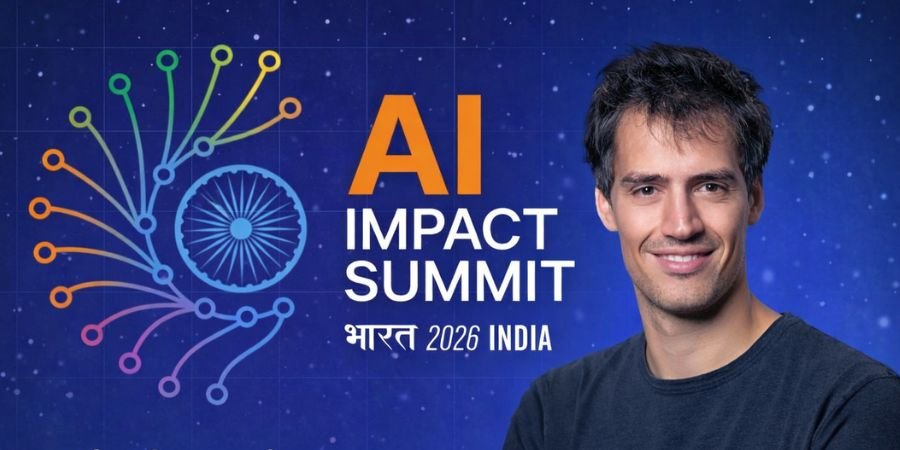
Arthur Mensch Advocates Technological Sovereignty at Global AI Summit
Arthur Mensch, CEO and co-founder of Mistral AI, called for stronger Technological Sovereignty during his keynote address at the Global AI Summit this week, warning against the concentration of artificial intelligence infrastructure in the hands of a few global hyperscalers.
Speaking before policymakers, industry executives, and AI researchers, Mensch argued that nations must retain control over their digital infrastructure, compute resources, and foundational AI models to ensure long-term competitiveness and security.
The remarks, delivered during a leadership panel discussion at the summit, have since fueled online debate and positioned Mensch as one of the most prominent voices advocating decentralized AI development.
The Case for Technological Sovereignty in the AI Era
Mensch emphasized that Technological Sovereignty is no longer a political slogan but an economic necessity. He warned that overreliance on a small number of multinational cloud providers could limit innovation, increase systemic risk, and undermine regional autonomy.
Without naming specific firms, he referred to the growing dominance of U.S.-based hyperscalers in AI infrastructure and compute capacity. According to Mensch, concentrating advanced AI models and large-scale computing power within a narrow ecosystem could stifle competition and restrict access for startups and public institutions.
He argued that open ecosystems — including open-weight and open-source models — provide a viable counterbalance, enabling innovation across borders while maintaining transparency.
Mistral AI’s Open-Source Positioning
Under Mensch’s leadership, Mistral AI has emerged as one of Europe’s fastest-growing AI startups, known for releasing high-performance open-weight language models. The company’s strategy contrasts with more closed, vertically integrated approaches adopted by some global tech giants.
Mensch stated that open development frameworks allow smaller nations and independent developers to build competitive AI systems without surrendering control to centralized platforms. He described this approach as foundational to Technological Sovereignty in Europe and beyond.
Industry observers note that Mistral AI’s stance reflects broader geopolitical shifts, as governments worldwide debate data localization, AI governance, and infrastructure resilience.
Why Arthur Mensch Is Trending
Mensch’s comments quickly circulated across technology and policy circles, with analysts highlighting his refusal to support AI monopolization by a handful of infrastructure providers.
His positioning resonates amid rising concerns about compute scarcity, export restrictions, and regulatory fragmentation. As AI models become increasingly resource-intensive, the question of who controls compute infrastructure has taken center stage.
By directly challenging hyperscaler dominance and advocating decentralized innovation, Mensch has strengthened his profile as a leading proponent of Technological Sovereignty in the AI sector.
Broader Policy and Industry Implications
The debate around Technological Sovereignty intersects with ongoing discussions in Europe, North America, and Asia regarding AI regulation, digital trade, and strategic autonomy.
Governments are increasingly examining public-private partnerships to secure domestic AI capabilities, while startups are exploring collaborative frameworks to reduce dependency on centralized cloud providers.
Mensch’s remarks reflect this broader momentum, signaling that AI infrastructure governance may become one of the defining policy issues of the decade.
What Comes Next
As global AI investment accelerates in 2026, calls for diversified infrastructure and open innovation models are expected to intensify.
Whether policymakers translate the rhetoric of Technological Sovereignty into concrete funding, regulatory, and infrastructure decisions remains to be seen. However, with Arthur Mensch and Mistral AI at the forefront of the conversation, the push for a decentralized AI future is likely to remain a central theme in industry discourse.
Read Also: Elena Heber Recognized for Digital Health Scaling as Finalist for EIC Women Innovators Prize 2026